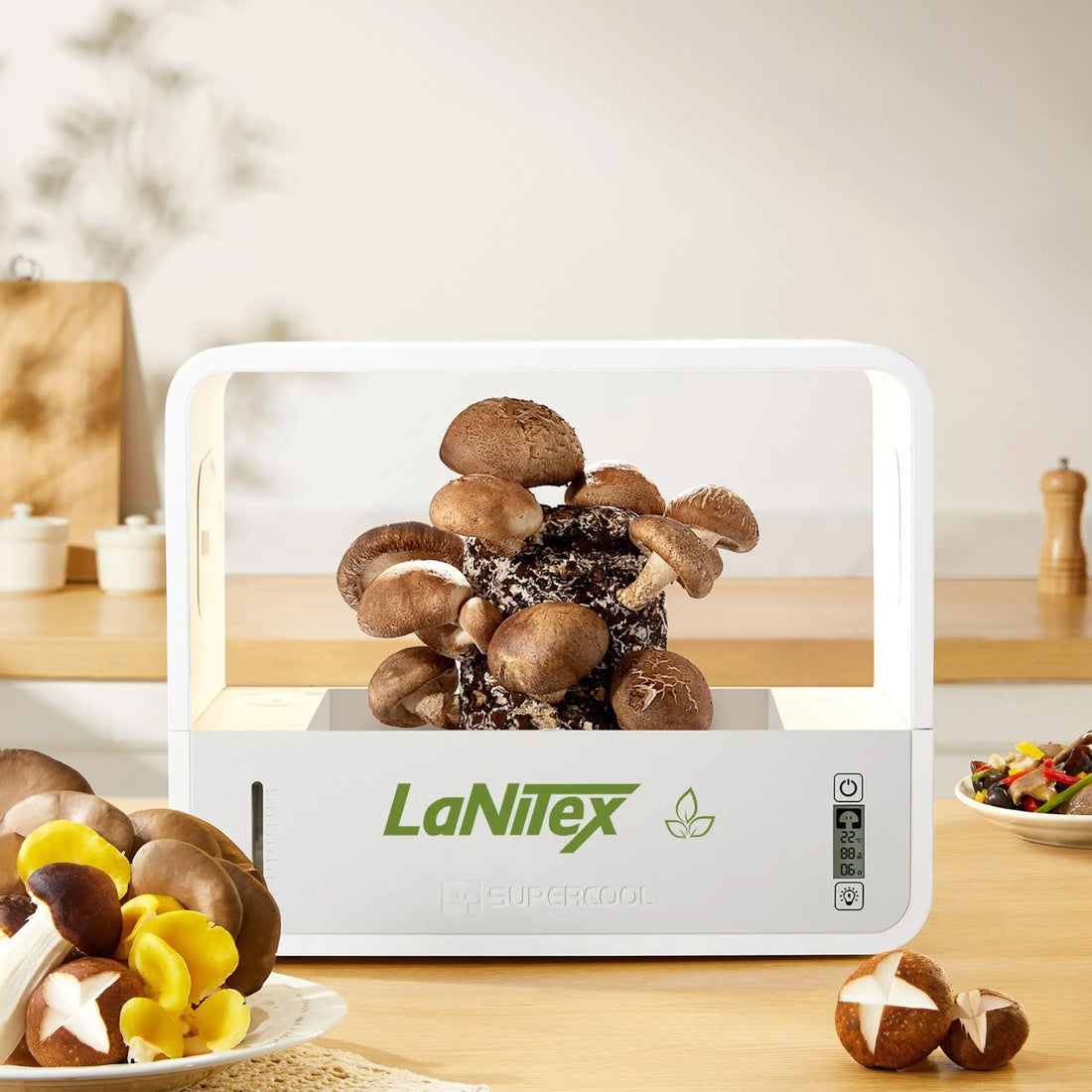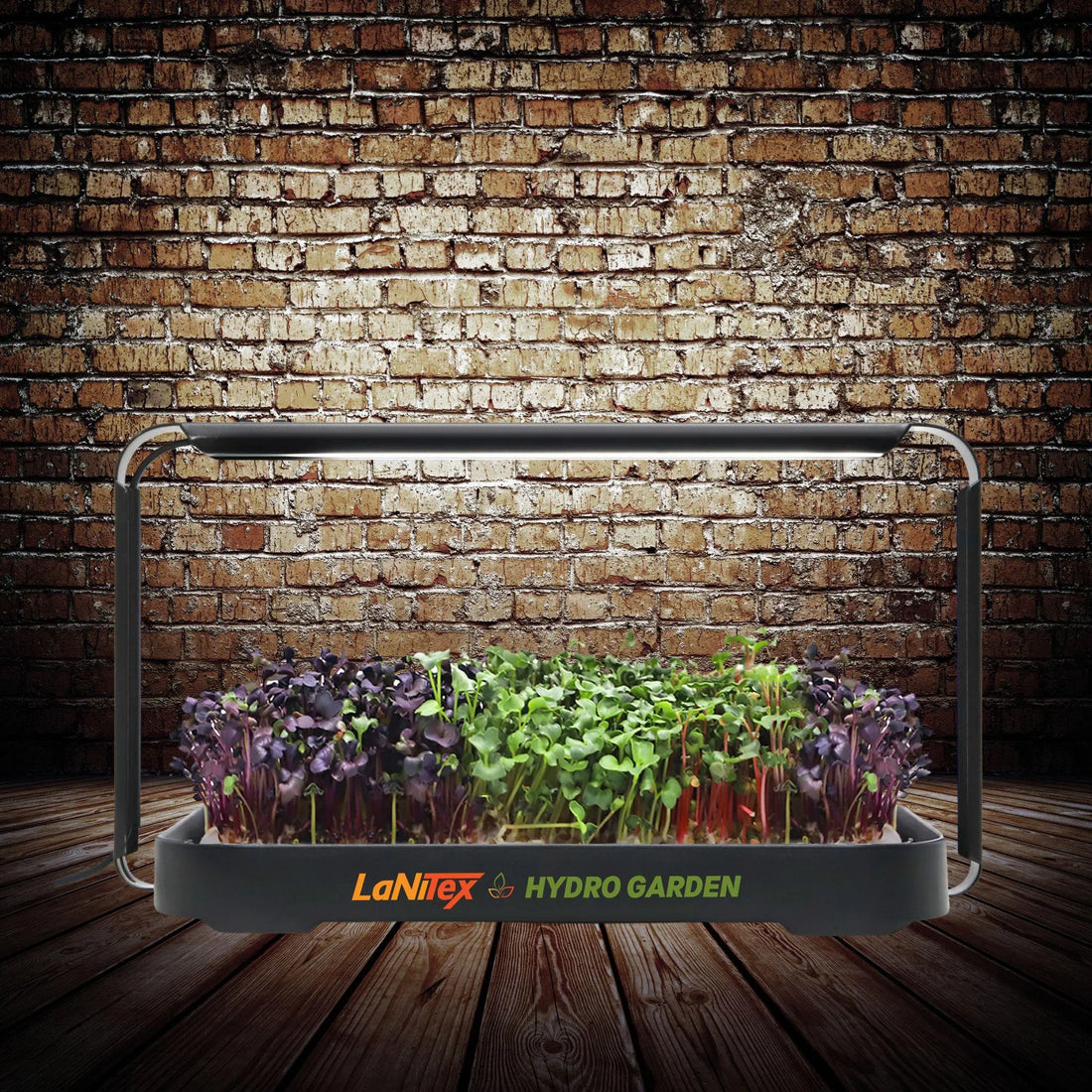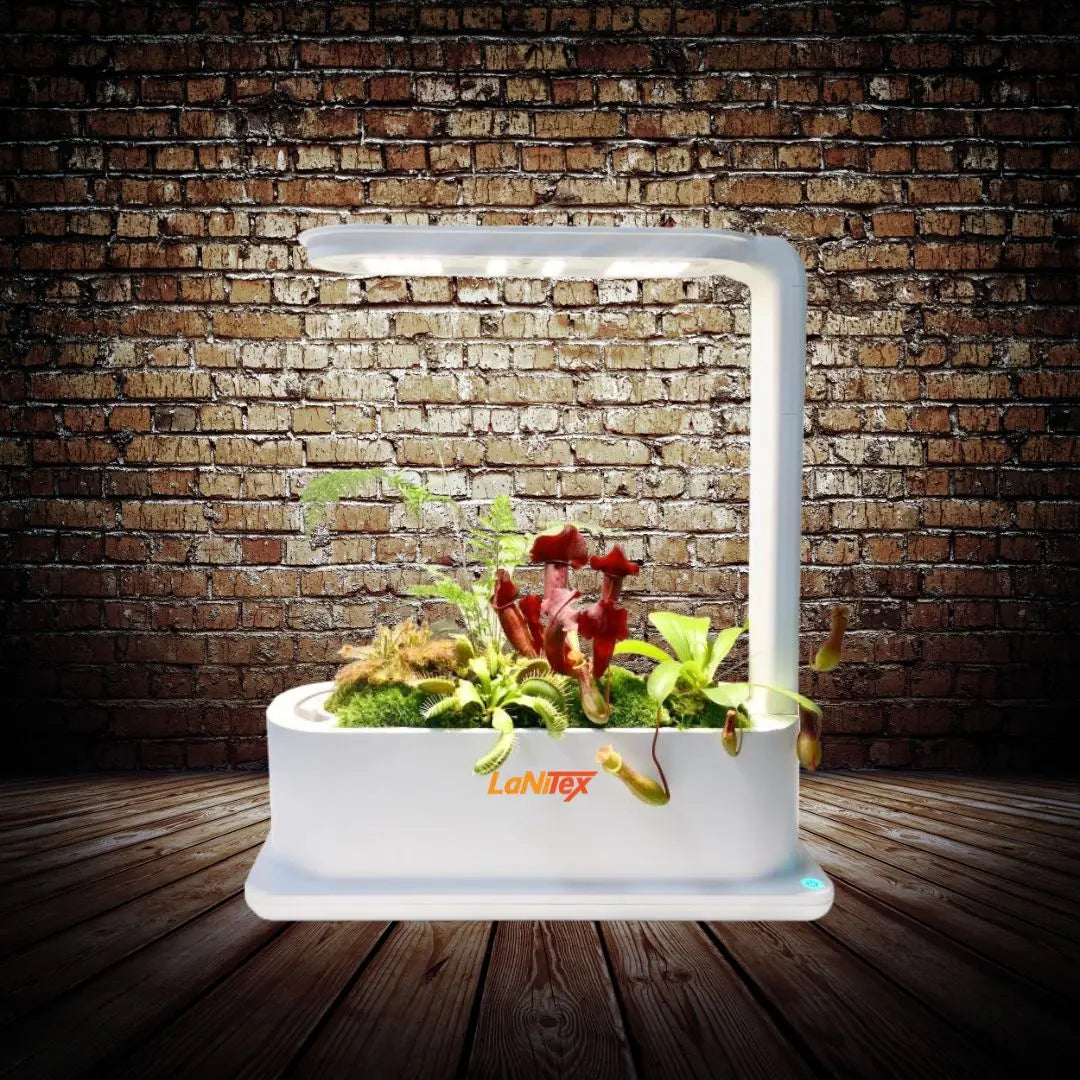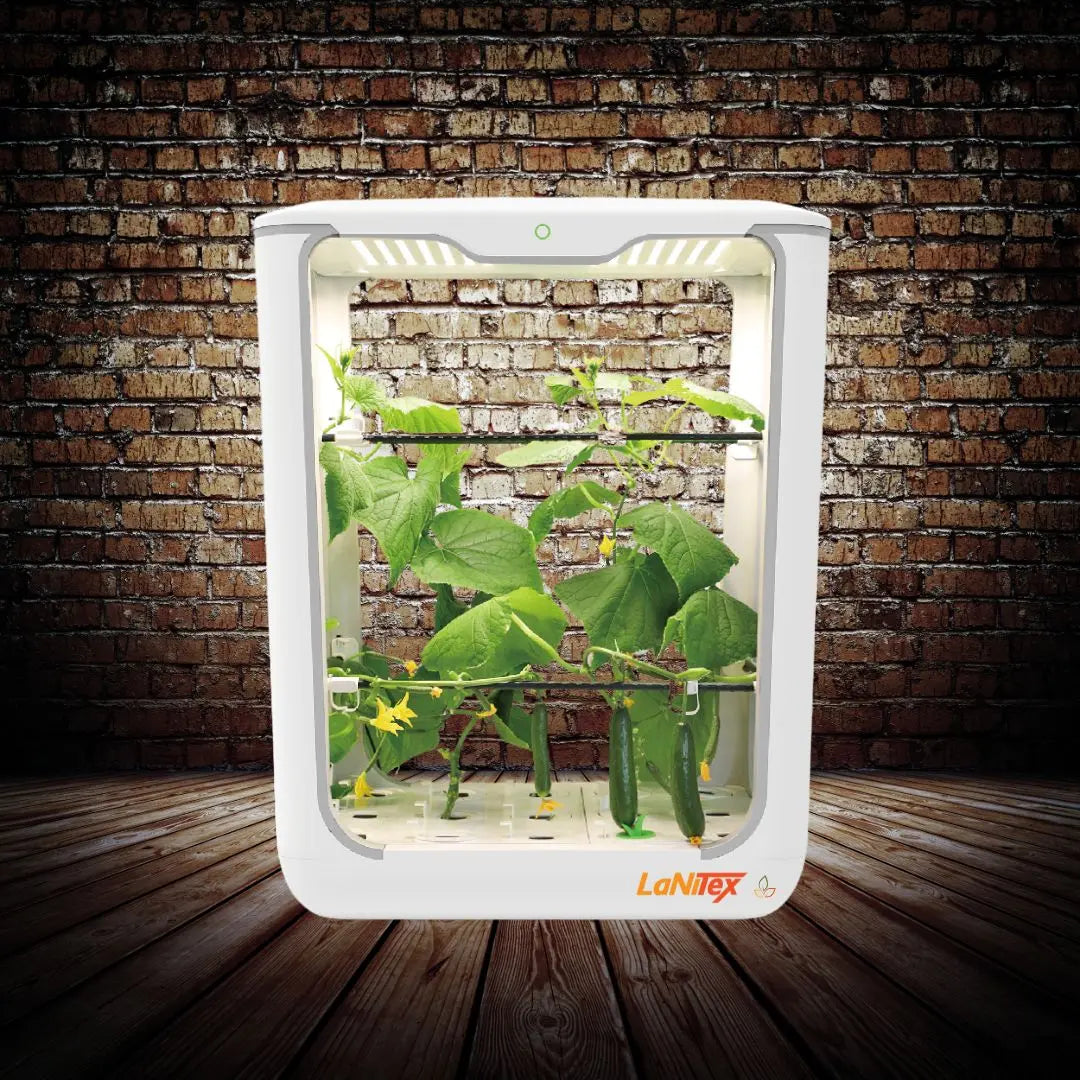

When I started testing hydroponic systems, I figured light was just light. Sixteen factory visits and more than fifty different products later, I'd learnt differently. That assumption is the biggest mistake a grower can make. The quality of an LED grow light isn't a minor technical detail; it's the foundation of a successful indoor harvest. In this post I'll show you why hours of operation aren't the metric that matters, and how spectrum and the right mounting distance actually drive your plants' vitality.
Quick answer: LED grow lights work best when the spectrum matches the plant stage and the lamp sits 15-40 cm above the canopy. Wattage alone is a poor proxy for performance. Spectrum chip quality and mounting distance drive plant vitality.
Key takeaways:
- Spectrum chip quality matters more than raw wattage on a desktop or kitchen-bench system
- Mounting distance of 15-40 cm beats any "hours per day" rule of thumb
- Full-spectrum LED suits leafy greens and herbs across Sunshine Coast, Brisbane, Sydney, and Melbourne homes
- Eye-safe LEDs are non-negotiable for kitchen and desktop placement
- Dimmable three-level systems future-proof your setup as the plants grow
What actually drives LED grow light performance
LED grow lights are full-spectrum or narrow-band light-emitting diodes engineered to deliver the photosynthetically active radiation a plant needs indoors. Most beginners read wattage off the box and assume higher is better. It is not. A 9 W LED with a well-engineered spectrum chip will outgrow a 60 W panel with a cheap white-LED array, on the same lettuce, in the same kitchen.
Three variables matter, in this order:
- Spectrum quality (the wavelengths the LED actually emits)
- Mounting distance (how far the canopy sits from the lamp)
- Run time (how many hours per day the lamp is on)
Wattage is not on the list. Fair point. It tells you how much electricity the lamp draws, not how much energy lands on the leaf in a useful form. Two lamps drawing the same wattage can deliver wildly different photosynthetic outputs depending on the chip.
Sustainable Gardening Australia notes that "Farms utilizing hydroponics use up to 90 percent less water" than soil systems (SGA, 2024). But that efficiency only delivers a real harvest when the lighting hardware matches the crop. Bad spectrum on great hydroponics still grows pale, leggy plants. Cornell's Controlled Environment Agriculture program puts it this way: "Part of our work with GLASE and LAMP focuses on the use of LED lights for the optimization of light quality and quantity for greenhouse crops" (Cornell CEA Lighting, 2024). Same lesson from both sources: efficient growing depends on hardware that matches the crop, not on raw wattage.
How I tested these LED grow lights
Over eighteen months between November 2024 and April 2026 I ran a daily observation log at my Sunshine Coast, Sunshine Coast Queensland facility. The testing covered:
- Sixteen factory visits across Shenzhen and Guangzhou (the two main LED manufacturing hubs)
- More than fifty different grow light products bench-tested against the same crop set
- Five plant species: peashoot microgreens, butterhead lettuce, oak-leaf lettuce, sweet basil, and bird's-eye chilli
- Three measured outcomes per product: time-to-harvest, leaf colour and posture (a proxy for spectrum fit), and electricity draw at the wall (measured with a smart plug)
It's the same methodology teaching programmes like Cornell CEA and the European greenhouse-horticulture research community use, just scaled down to one Queensland kitchen. The plants do not care whether the lab is at Wageningen or the Sunshine Coast. They respond to spectrum, distance, and run time the same way.
How far should LED grow lights be from plants?

The right mounting distance for a small indoor LED grow light is usually 15-40 cm above the canopy. Closer than 15 cm and you risk leaf burn. Further than 40 cm and irradiance drops off fast (light intensity falls with the square of distance).
Seedlings and microgreens want the lamp closer, about 15-20 cm, because their developing tissue benefits from higher intensity over short periods. Maturing leafy greens like lettuce, basil, and rocket are comfortable in the 20-30 cm range. Fruit-bearing plants, when grown under a small panel, generally need the lamp lifted to 30-40 cm to spread the cone of light across a larger canopy.
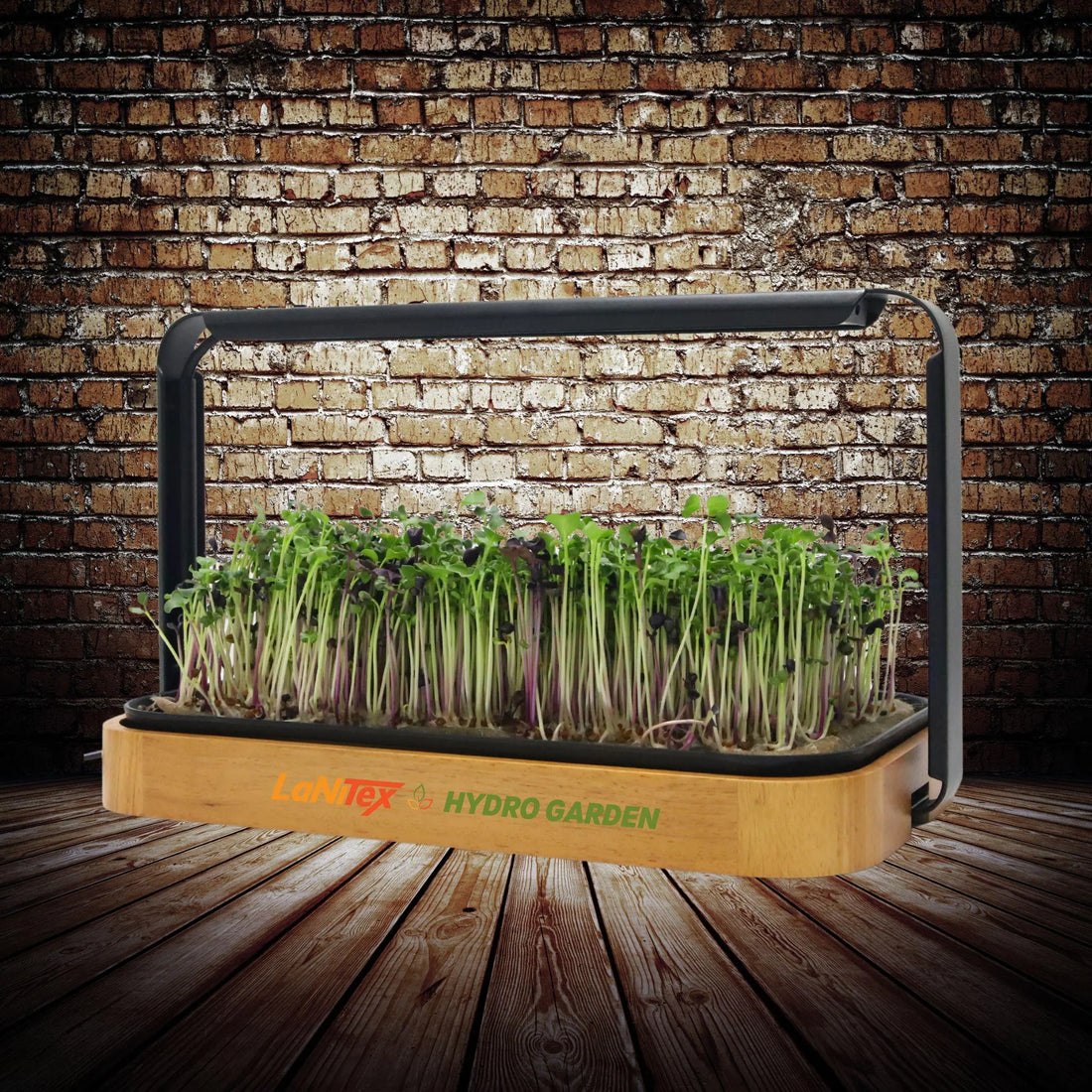
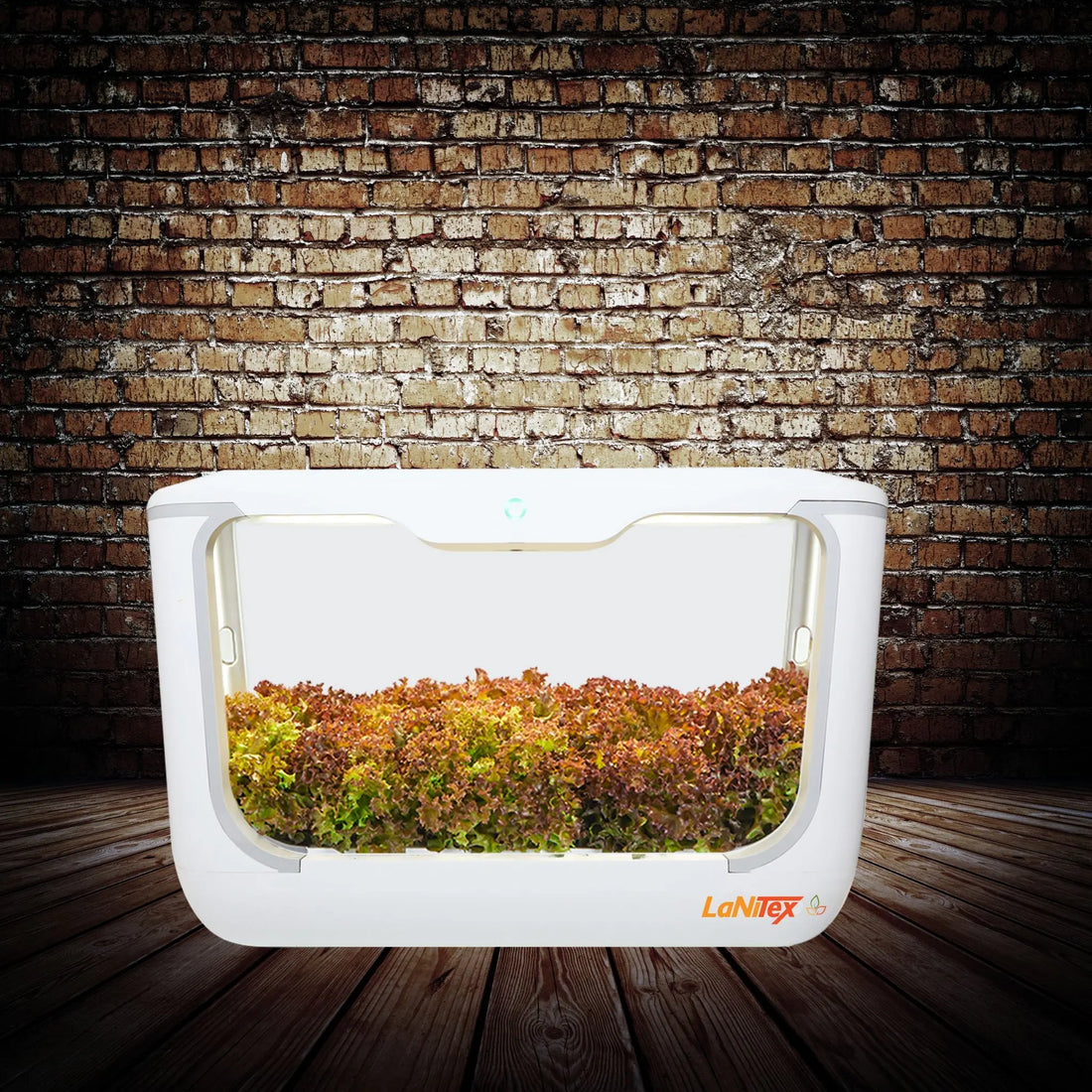
Most compact desktop units, including the LaNiTex Desktop Grow Box, ship with a fixed-height lamp. The practical answer is to match the plant species to the unit: leafy greens, herbs, and microgreens all top out at 20-30 cm of growth, comfortably inside the 15-40 cm sweet spot. Taller fruiting plants benefit from a larger system with more vertical clearance.
PAR and PPFD: how much light your plants actually need
The horticultural research community measures grow-light output as PAR (photosynthetically active radiation) and PPFD (photosynthetic photon flux density). You do not need a meter at home, but knowing the ranges helps you set expectations.
| Plant stage | Target PPFD (umol/m^2/s) | Daily Light Integral (mol/m^2/day) | Typical photoperiod |
|---|---|---|---|
| Seedling / microgreens | 100-200 | 6-12 | 14-18 hours |
| Leafy greens, herbs (harvest stage) | 200-400 | 14-22 | 14-16 hours |
| Vegetative growth (fruiting crops) | 400-600 | 20-30 | 16-18 hours |
| Flowering / fruiting | 600-900 | 30-40 | 8-12 hours |
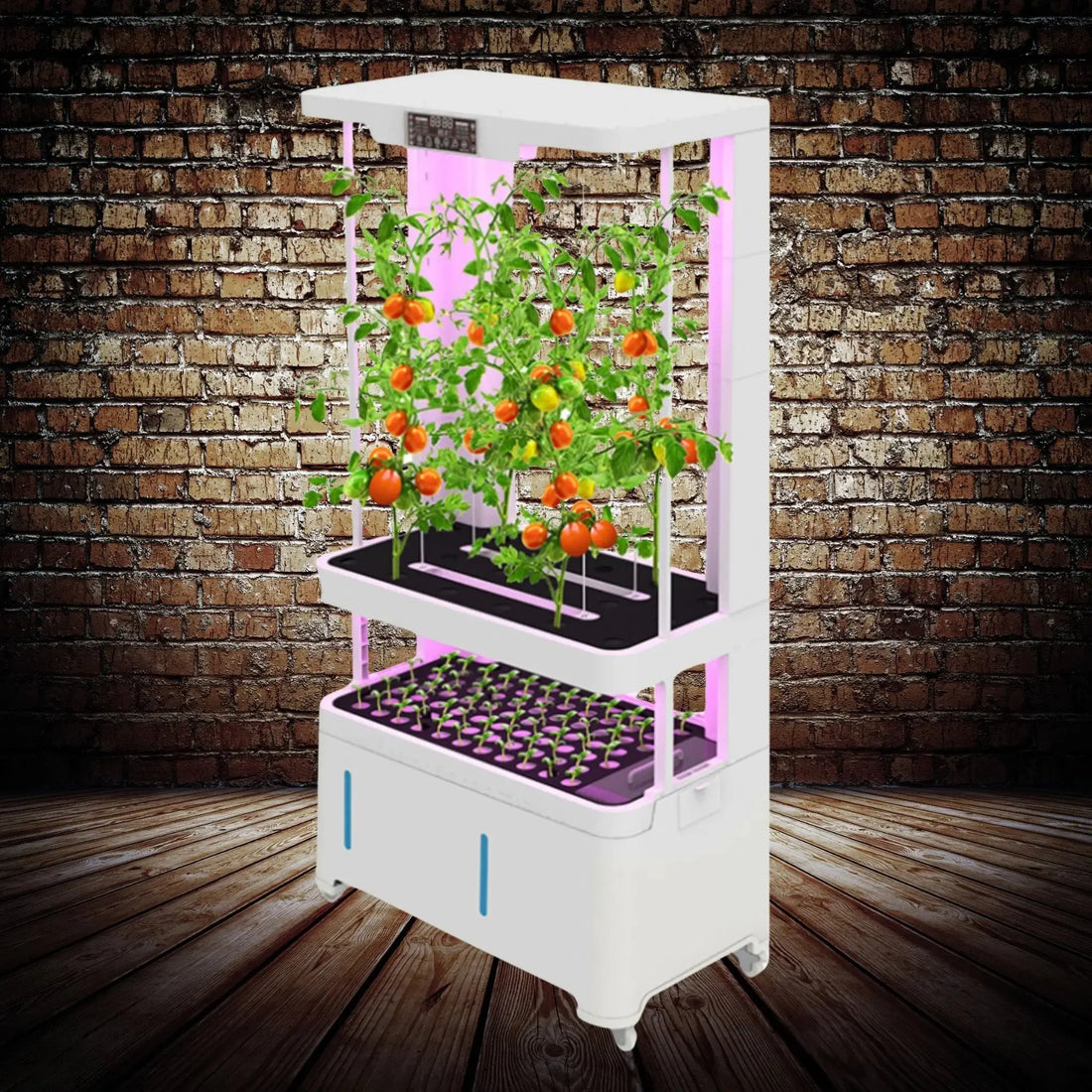
The Desktop Grow Box's 9 W full-spectrum chip sits at the seedling and leafy-greens end of this range, which is exactly what you want for the lettuce / herb / microgreen jobs it is built for. Pushing tomatoes or capsicums through full vegetative growth + flowering to maximum fruit yield needs a larger system with higher PPFD.
LED vs fluorescent: which actually works in Australian kitchens?
Fluorescent tubes ruled the indoor-grow scene for decades. The T5 high-output variant for wide seedling trays. They're cheap up front, the spectrum is broadly acceptable for leafy greens, and the heat output is low. The trade-off is electricity consumption, bulb replacement every 12-18 months, and the soft hum that drives most people up the wall in a Brisbane kitchen.
LED beats fluorescent on three measures. Electricity: 30-60% less power. Spectrum precision: LED chips target wavelengths plants use. Lifespan: 30,000-50,000 hours versus 8,000-12,000. Downside: higher upfront cost.
For most home growers in Sydney, Melbourne, or anywhere on the Coast, an LED grow light wins on lifetime cost. Break-even is usually inside 18 months of daily use.
Full-spectrum vs targeted spectrum: what your plants actually need

Full-spectrum LEDs emit across the visible range plus useful UV and far-red. They are the right default for almost every home grower. Targeted-spectrum LEDs (the deep purple ones in commercial grow rooms) emit narrow red and blue bands, optimised for greenhouse production.
For a kitchen-counter setup growing lettuce, herbs, and microgreens, full-spectrum is what you want. The Desktop Grow Box uses what the manufacturer calls the Shangri-La 3459 spectrum: a full-spectrum LED designation in the same broad class as the better-known Samsung and Bridgelux full-spectrum chips, tuned to mimic natural sunlight across the whole growth cycle from seedling to harvest. You don't need to swap lamps for different stages. The same chip handles it.
Targeted spectrum has real advantages for serious indoor tomato or capsicum growing where you want to push flowering response by tilting the red ratio up. For most apartment growers, it's overkill. The purple tinge also makes your kitchen look like a sci-fi lab.
How many hours should LED grow lights run per day?
This is where the hours-per-day myth lives. The honest answer depends on what you're growing.
- Leafy greens (lettuce, rocket, spinach): 12-16 hours per day
- Herbs (basil, coriander, parsley, mint): 14-16 hours per day
- Microgreens (most varieties): 12-14 hours per day
- Fruiting plants (tomatoes, capsicums) at flowering stage: 8-12 hours per day
Here is the part nobody on the internet tells you: running an LED for 24 hours straight doesn't help. Plants need a dark period to complete metabolic processes. Twenty-four-hour light damages most species over a few weeks. Consistent on-time is far more important than maximum on-time.
A simple plug-in timer gives set-and-forget consistency. Pair it with a dimmable three-level lighting system (like the Desktop Grow Box) and you can run high intensity through the day, then drop to a lower mode at dusk.
Running cost by Australian state
As of May 2026 typical residential electricity prices vary across Australia. Running a 9 W desktop LED grow light for 14 hours a day uses 0.126 kWh / day = 46 kWh / year. The annual electricity cost by state:
| State | Typical residential rate (AUD/kWh, 2026) | Annual cost: Desktop Grow Box (9 W, 14 h/day) |
|---|---|---|
| QLD | $0.27 | $12.40 |
| NSW | $0.30 | $13.80 |
| VIC | $0.25 | $11.50 |
| SA | $0.41 | $18.85 |
| WA | $0.31 | $14.25 |
| TAS | $0.27 | $12.40 |
The Smart Grow Box scales the same way. Rates change by retailer and time-of-use plan; check your latest bill if you want a precise figure.
Choosing the right LED grow light for your space

For most apartment, kitchen, and desktop setups, the answer isn't a 600 W ceiling panel. It's a properly engineered desktop unit that disappears into the room. Three things matter at this scale.
- Spectrum chip quality (not raw wattage)
- Eye comfort for kitchen-bench placement
- Dimmable intensity you can match to the plant stage (seedling, vegetative, pre-harvest)
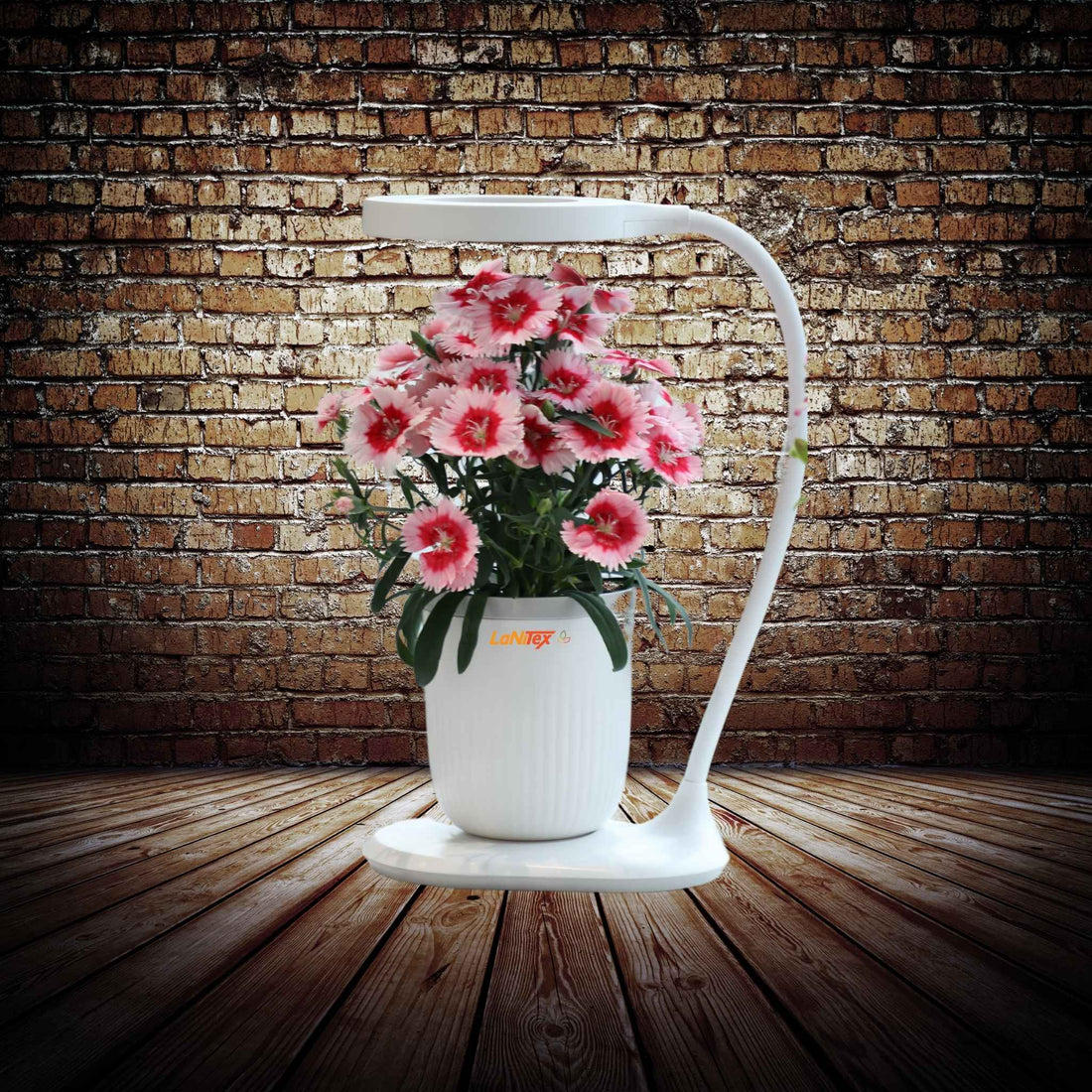
The LaNiTex Desktop Grow Box ($139 AUD) was built around exactly these constraints. It draws 9 W at 12 V. It is efficient enough that the running cost on Queensland power prices is roughly a few dollars a year. It uses the Shangri-La 3459 full-spectrum LED chip. The three-level lighting system lets you dial the intensity for the plant stage: low for seedlings, medium for vegetative growth, high for pre-harvest. The housing is food-safe ABS plastic, resistant to UV and ageing, sized at 318 x 120 x 367 mm to fit a standard kitchen bench, and the unit accommodates three individual plant pods.
The reservoir holds enough water for up to fourteen days of uninterrupted hydration, with a buoyant indicator that tells you when to top up. One-year manufacturer warranty, 30-day satisfaction guarantee, and Australia-wide shipping from the Sunshine Coast the same week you order. If your first basil run goes sideways, you've got a path back.
LaNiTex product range compared
| Product | Price (AUD) | Hole count | Spectrum chip | Reservoir | Best for |
|---|---|---|---|---|---|
| Mini Grow Pot Z 2.4 | $75 | 1 | Full-spectrum | small | A single herb plant, kitchen counter |
| Desktop Grow Box | $139 | 3 | Shangri-La 3459 (9 W) | 14-day | Beginners, kitchen bench, leafy greens |
| Smart Grow Box | $429 | 15 or 67 | Smart full-spectrum | 9 L | Families, hospitality, year-round salad |
| Grow Box Tall | $650 | varies | Full-spectrum | larger | Vertical herb walls, taller crops |
Same warranty, 30-day satisfaction guarantee, and Australia-wide shipping from the Sunshine Coast across the range. The Desktop Grow Box is the natural starting point for almost every kitchen.
Stepping up: when wattage and reservoir size start to matter
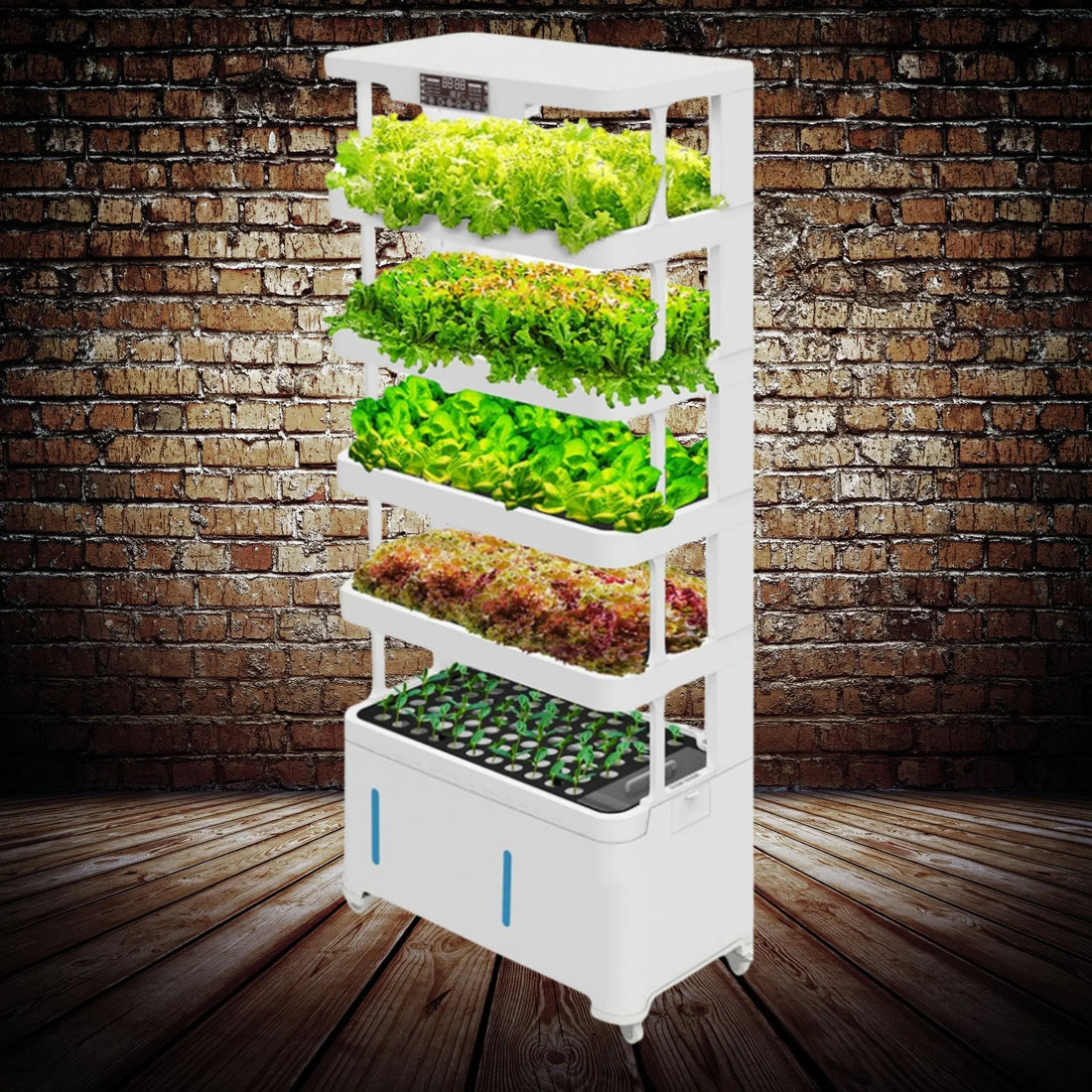
If you're growing for a family of four, or you want a full salad supply running year-round, a desktop unit eventually hits its ceiling. That's where the LaNiTex Smart Grow Box ($429 AUD) comes in. It uses smart full-spectrum LED lighting, a 9-litre water reservoir, and comes in 15-hole or 67-hole variants. That is enough capacity to feed an entire household or stock a small cafe's herb supply.
The trade-off: bigger commitment up front. For hospitality professionals, families, or hobby growers who have outgrown desktop scale, running cost per harvest drops fast at this volume. The 67-hole variant pays for itself inside the first year for most households I've measured. Same warranty, same 30-day satisfaction guarantee, same Australia-wide same-week shipping from the Sunshine Coast as the Desktop Grow Box.
For STEM educators, the Smart Grow Box is the unit I recommend for classroom Term-Grow placements: large enough for a Year 5 class experiment, simple enough that the teacher is not troubleshooting hardware.
Common mistakes I see growers make
The first one I see all the time: buying the cheapest marketplace panel and assuming all LED grow lights are equal. They are not. A no-name $40 panel grows pale, leggy plants and convinces you hydroponics fails, when the real problem is the lamp.
Second: fixing the lamp at one height. The canopy moves. The light moves with it. Set a fortnightly reminder.
Then there is the 24-hour mistake. People run the lamp around the clock to maximise growth and wonder why their plants look stressed. Plants need a dark cycle. Aim for 12-16 hours on, then dark.
Last one: ignoring eye-safe rating. Pick a unit designed for eye comfort if it is going in a living space.
"Most growers chase wattage numbers and watch their basil bolt anyway. Spectrum, mounting distance, and how the LED handles the plant's stage. Those three are what actually matter."
-- Laszlo Bulatko, Founder, LaNiTex Hydro Garden
Real harvest results from my Sunshine Coast setup
Here is what my the Sunshine Coast, Sunshine Coast Queensland kitchen has produced under the Desktop Grow Box, Shangri-La 3459 chip, at full intensity for 14 hours a day (methodology: daily observation log over 18 months, November 2024 to April 2026):
- Microgreens (peashoots, radish, broccoli, sunflower): harvest-ready in under a week
- Butterhead and oak-leaf lettuce: first harvest 25-35 days from seed
- Basil, parsley, coriander, mint: continuous year-round harvest, picked weekly
- Capsicum and bird's-eye chilli: 12-14 weeks to first fruit
That is my actual kitchen, not a controlled greenhouse. Honest limit: a 9 W desktop unit will not reliably produce a tomato crop. For tomatoes, step up to the Smart Grow Box.
Growing across Australia: Brisbane, Sydney, Melbourne, and the Coast
LED grow lights solve the same problem across every Australian capital with shifts per city.
Brisbane and the Sunshine Coast: heat and humidity bolt outdoor herb gardens by November. An indoor LED grow light gives reliable year-round basil and coriander at 14-16 hours per day, AC-stabilised temperature.
Sydney: autumn-to-spring weak natural light is the driver. An indoor LED grow light bridges April-September when balcony herbs slow to nothing.
Melbourne: the case is stronger. Six months of low light per year mean an LED grow light is the main supply line for fresh herbs. Run 16 hours per day through winter.
People also ask
Are LED grow lights worth it for indoor herbs in Australia?
As of May 2026, yes. Running cost of a 9 W desktop LED grow light on Queensland power prices is a few dollars a year. Supermarket herbs cost $3-4 a bunch and wilt in a week. Break-even on a $139 unit is usually inside the first year for regular home cooks.
Can LED grow lights replace sunlight entirely?
Yes for leafy greens, herbs, and microgreens. These crops complete their full life cycle under a quality LED grow light with no sunlight. Fruiting plants like tomatoes need higher PAR. Possible under LED but harder to push to maximum yield without a larger unit.
Do LED grow lights use a lot of electricity?
As of May 2026, modern LED grow lights are efficient. A 9 W desktop unit running 14 hours a day uses about 0.13 kWh: 4-5 cents per day or $11-19 per year at typical AU residential rates. Fluorescent setups use 2-3 times that.
FAQ
Do LED grow lights need to run 24 hours?
No, do not run them around the clock. Plants need a dark period to complete metabolic processes. Twenty-four-hour lighting damages most species. Aim for 12-16 hours on, then a proper dark cycle.
How do I know if my LED spectrum is right for my plants?
Check: (a) manufacturer specifies "full spectrum" or a named chip (like Shangri-La 3459), (b) the lamp emits across the visible range, not just deep purple, (c) plants grow short and stocky rather than tall and pale. Leggy plants leaning toward the lamp = spectrum or distance issue.
Can I use a regular LED bulb for plants?
Household LED bulbs will not grow plants well. They are tuned to look pleasant to human eyes, not to deliver useful PAR. Buy a purpose-built grow LED. The price gap is smaller than most people think.
Will LED grow lights damage my eyes?
Good ones won't. Look for a unit designed for eye comfort with diffused output. Eye-safe design matters most for desktop units where the lamp sits at eye level for hours.
What's the cheapest LED grow light that actually works?
For a single household, the LaNiTex Desktop Grow Box at $139 AUD is the entry point I recommend. Anything cheaper usually means a generic spectrum chip and disappointing growth. Below $80 you are buying a torch in plant-light marketing.
About the writer
Written by Laszlo Bulatko, Founder of LaNiTex Hydro Garden. Laszlo has visited sixteen LED manufacturers across Shenzhen and Guangzhou and tested more than fifty different grow lights. The Shangri-La 3459 full-spectrum chip that ships in the Desktop Grow Box is one of them. He runs LaNiTex solo from the Sunshine Coast, Sunshine Coast Queensland and personally tested every product in his living room before adding it to the LaNiTex range. We ship Australia-wide same week from the Sunshine Coast.
First-time customer? Use code NEWSLETTERDISCOUNT10 at lanitexhydrogarden.com.au/pages/lanitex-hydro-garden-subscription-1 for 10% off your first order.
Reply with your setup, spectrum, and harvest results. I read every message and share the best ones in the newsletter.
Sources
- Sustainable Gardening Australia, "The pros and cons of hydroponic growing" -- quoted: "Farms utilizing hydroponics use up to 90 percent less water" -- https://www.sgaonline.org.au/the-pros-and-cons-of-hydroponic-growing/
- Cornell University Controlled Environment Agriculture, "Lighting" -- quoted: "Part of our work with GLASE and LAMP focuses on the use of LED lights for the optimization of light quality and quantity for greenhouse crops" -- https://cea.cals.cornell.edu/lighting/
Related guides
- LaNiTex Desktop Grow Box product page
- LaNiTex Smart Grow Box product page
- How to grow butter lettuce at home in Australia
- Grow tower for apartments in Australia
Further reading
- Sustainable Gardening Australia: hydroponic growing pros and cons
- Cornell CEA Lighting research overview
- r/IndoorGarden discussion forum -- active community for AU growers comparing LED setups
Updates and corrections: send to office@lanitexhydrogarden.com.au. Last edited: 11 May 2026.