
Cucamelons look like grape-sized watermelons and taste like cucumber with a squeeze of lime, and a hydroponic setup makes them one of the easiest novelty crops to grow indoors in Australia - cropping well past the short outdoor summer.
Quick answer: Grow hydroponic cucamelons in Australia by holding pH at 5.5 to 6.5, EC at 1.8 to 2.2 mS/cm and 12 to 14 hours of LED light at 22 to 27C. Give the 2.5 to 3 m vine a tall trellis, hand-pollinate the flowers indoors, and harvest grape-sized fruit in 60 to 80 days.
Indoors, a hydroponic system takes the two things that make cucamelons hit-and-miss outdoors - the weather and the short warm season - out of the picture. The plant (also called the Mexican sour gherkin or mouse melon) just wants steady conditions: a stable pH, the right nutrient strength, and 12 to 14 hours of LED light a day. Get those right and a compact bench setup keeps fruiting through the year, no greenhouse or backyard needed.
This guide walks through the conditions, the system choice, the timing and the techniques that make hydroponic cucamelons reliable in an Australian home.
What is a cucamelon?
The cucamelon (Melothria scabra) is a climbing vine in the Cucurbitaceae family - the same group as cucumbers, melons and pumpkins - native to a broad range from Mexico to Venezuela. Its common names, Mexican sour gherkin and mouse melon, both describe the fruit: an olive-shaped, grape-sized berry about 2.5 to 4 cm long that looks like a miniature watermelon and tastes like crunchy cucumber with a sharp squeeze of lime.
Most cucamelons come from the true wild species rather than named cultivars, so seed stock is fairly uniform. The vine climbs with distinctive double-spiralled tendrils and reaches 2.5 to 3 m - which matters when you plan an indoor support.
On nutrition, cucamelons are a light, hydrating snack - mostly water with a little vitamin C and fibre. Enjoy the cucamelon health benefits in a varied diet, but treat it as a novelty crop rather than overstating the cucamelon nutrition profile.

The best hydroponic conditions for cucamelons
Every successful hydroponic cucamelons australia setup comes down to the same short list of numbers:
- pH: 5.5 to 6.5. Cucamelons are sensitive to drift; check regularly with a reliable 4-in-1 water quality tester.
- EC (nutrient strength): 1.8 to 2.2 mS/cm - firm enough to support fruiting without stressing young roots.
- Light: 12 to 14 hours a day of full-spectrum LED. As a typical guide, aim for around 200 to 400 umol/m2/s (PPFD) during vegetative growth and 400 to 600 umol/m2/s once the vine flowers and fruits.
- Temperature: 22 to 27C, the warm band this subtropical vine prefers.
- Humidity: 60 to 75%.
- Nutrients: a balanced NPK formula for fruiting cucurbits, plus calcium and magnesium (Cal-Mag) to prevent deficiency once fruit sets.
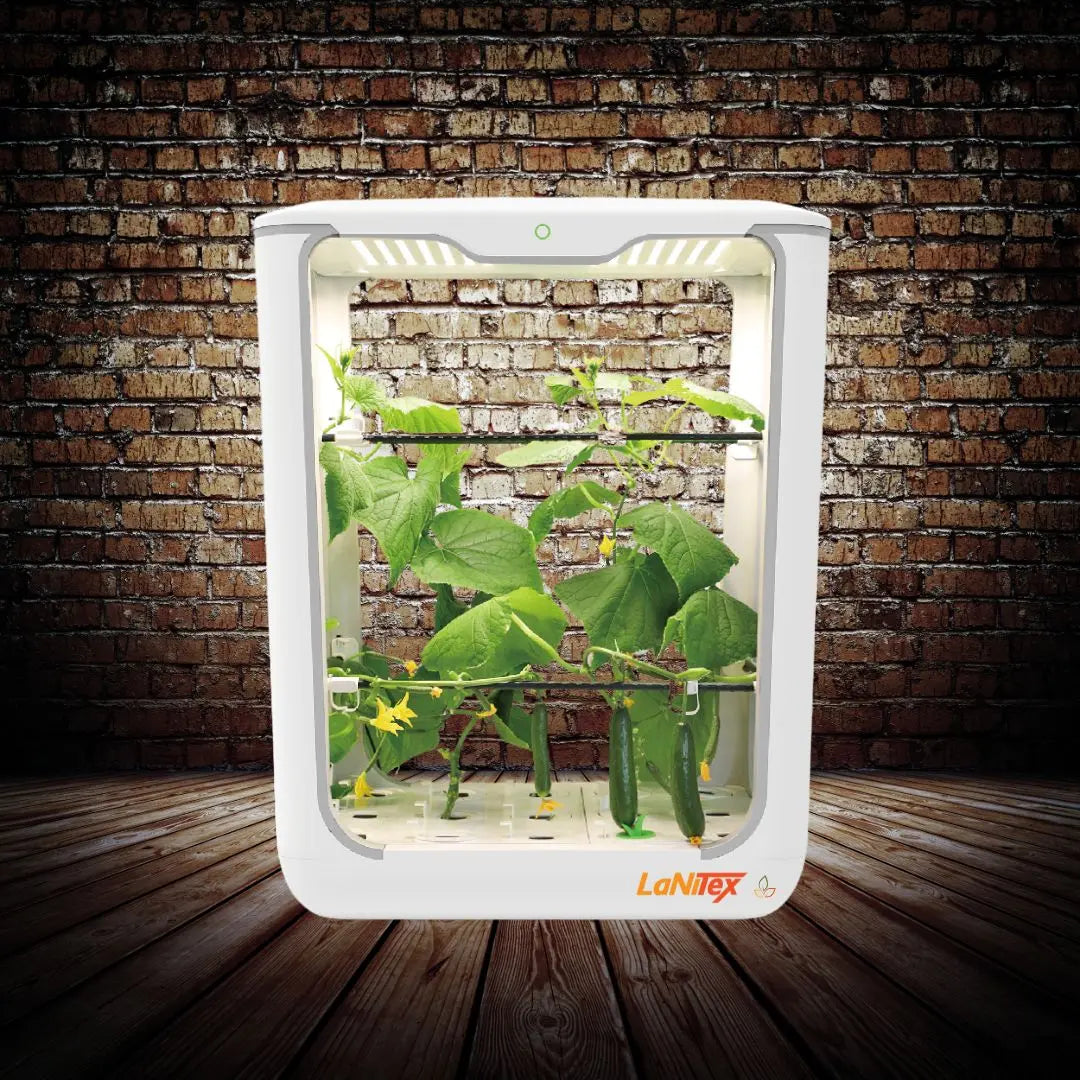
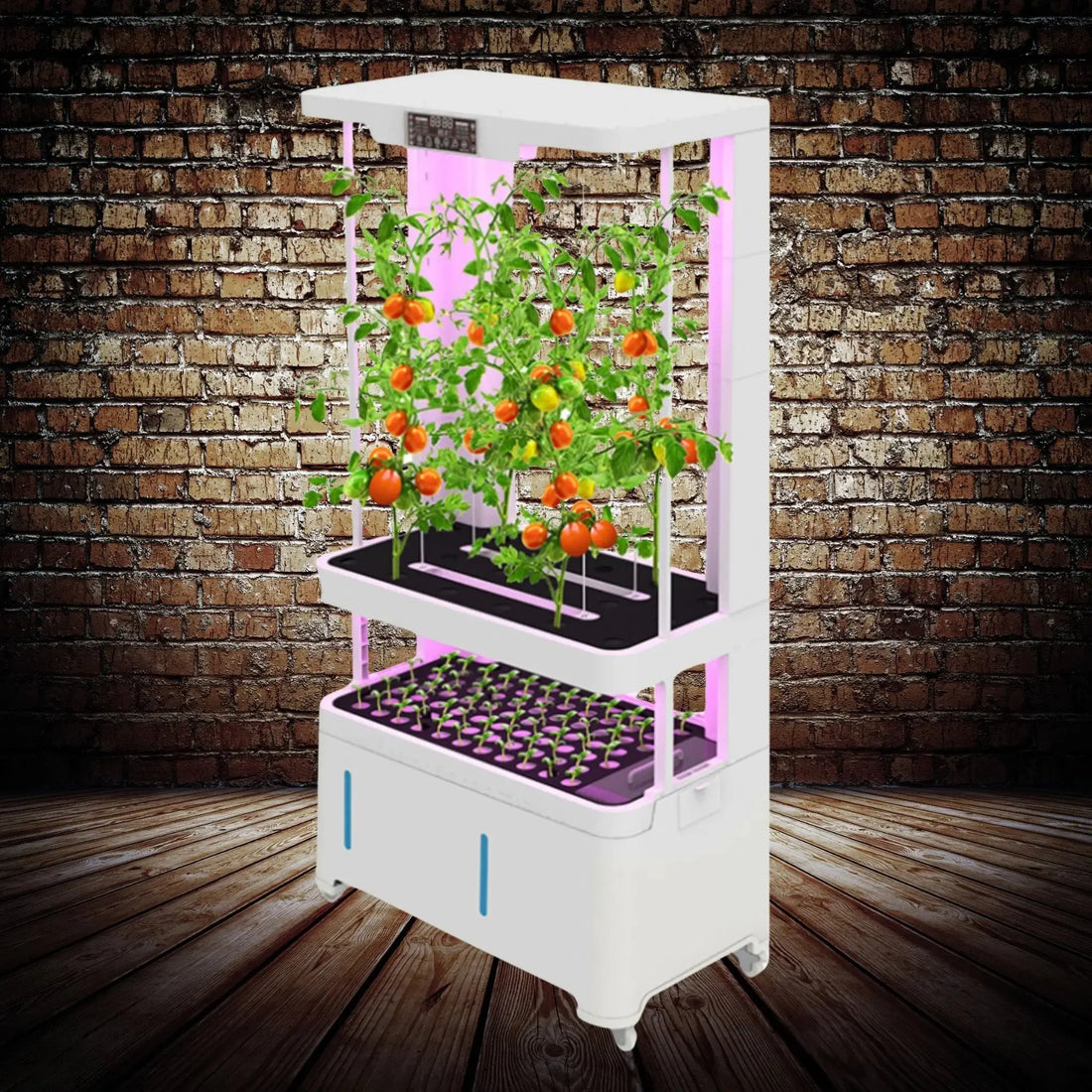
Because a cucamelon vine climbs to 2.5 to 3 m, the single most important hardware decision is height. A tall indoor system with an integrated trellis lets the vine run upward while the pump, tank and LED hold light, pH and EC steady - the exact stability cucamelons reward.

A climbing cucamelon vine needs height - the Smart Grow Box Tall gives the 2.5-3 m vine room to run up a trellis while the pump and full-spectrum LED hold pH, EC and light steady. You supply the seeds.
Start growing cucamelons →Personally tested at home on the Sunshine Coast before listing.
Soil growers battle weather and pests; indoors you simply hold a short list of numbers steady. For a broader primer on tanks, pumps and lighting, see the hydroponic system essentials guide.
What I've learned about growing cucamelons from research
Honesty first: I have not yet grown a full cucamelon crop myself. This section draws on horticultural sources and LaNiTex's hands-on hydroponic testing with other climbing and fruiting crops, not on a harvest of my own - and I would rather say that plainly than dress up second-hand notes as first-hand experience.
What the reliable sources agree on is encouraging. Australian growers at Leaf, Root & Fruit report that cucamelons are genuinely low-fuss once established, cropping heavily through late summer in Melbourne despite that city's shorter season. The RHS classifies the plant as a tender perennial grown as an annual because it will not survive frost - which lines up neatly with indoor hydroponics: remove the frost risk and the short season, and the plant's natural vigour does the work.
From our own testing of tall climbing crops under LED, one pattern holds: stability beats intensity. Vines given a consistent pH, steady nutrient strength and honest daily light hours outperform vines pushed hard then neglected - and cucamelons look set to behave the same way.
Which hydroponic system suits cucamelons?
Three common home systems can all grow cucamelons, and the right pick depends on your space:
- NFT (nutrient film technique): a thin stream of nutrient flows past the roots in a channel. Compact and water-efficient, though a heavy fruiting vine needs solid trellis anchoring above.
- DWC (deep water culture): roots sit in an oxygenated reservoir. Forgiving and cheap to start, and the larger water volume buffers pH and EC swings.
- Drip systems: nutrient is dripped onto a media-filled pot. Excellent root support for a tall, top-heavy vine, which is why many fruiting-cucurbit growers favour them.
For most Australian homes the deciding factor is not the irrigation method but vertical room. A cucamelon reaching 2.5 to 3 m needs a genuinely tall trellis, so a tall grow box with a stable reservoir, full-spectrum LED and built-in height is the most reliable choice. Cucamelons are cared for much like their closest relative - see our guide to hydroponic cucumbers for shared vine-training basics.
Planting, pollination and training
Sow one seed per hole or plug. Germination takes 4 to 13 days when the medium is held at 20 to 30C - cucamelons are slower to sprout than cucumbers, so patience pays. Once seedlings reach about 3 to 4 inches (8 to 10 cm) tall, transplant them into the system.
As the vine grows, train it up the trellis and pinch out the tip once it reaches the top of the support to encourage side-shoots and more flowers. The plant produces separate male and female flowers, and indoors there are no bees to move pollen between them. Hand-pollinate by dabbing a small, soft brush inside a male flower, then transferring the pollen to the centre of each female flower (the one with a tiny fruit swelling behind it). A few minutes every couple of days keeps fruit set high.

When to start cucamelons across Australia
Outdoors, timing is regional. In Melbourne and Perth, sow in late October or early November, or start seedlings in pots from August to October; fruit sets in January and February and can crop into May. Sydney runs a little ahead, while warmer zones such as Brisbane and the Sunshine Coast enjoy a longer natural window at both ends of the season.
Indoors under hydroponics, the calendar stops mattering. With controlled light, warmth and nutrients you can start a cucamelon vine any time of year and crop it continuously, wherever you live in Australia. Seed is easy to source: suppliers such as Greenharvest, The Diggers Club and Eden Seeds all stock cucamelon or Mexican sour gherkin seed.
Harvesting, overwintering and common problems
Harvest cucamelons when the fruit is grape-sized and firm, usually around 60 to 80 days from sowing. Pick often - regular harvesting keeps the vine producing, and fruit left too long turns soft and seedy. For more novelty-cucurbit ideas, see our kiwano guide and hydroponic melons guide. For a sweeter, more familiar homegrown fruit, our hydroponic strawberries guide covers day-neutral cultivars that fruit indoors year-round.

At the end of a season the vine dies back. A neat trick reported by both Leaf, Root & Fruit and Epic Gardening: lift the plant's underground tuber (its swollen root ball), store it cool and dry over winter, then replant in spring - a second-year tuber wakes faster and gives an earlier, heavier crop.
Watch for three common problems:
- Blossom drop: flowers fall without setting fruit, usually from heat spikes, erratic watering or poor pollination - steady the temperature and keep hand-pollinating.
- Nutrient lockout: yellowing or stalled growth when pH drifts outside 5.5 to 6.5 and roots can no longer absorb nutrients. Test and re-balance the reservoir.
- Powdery and downy mildew: fungal leaf diseases that spread in still, damp air. Keep foliage dry, space growth for airflow, and remove affected leaves early.

Ready to scale past one vine? The V5.2-A Tower grows up to 72 plants at once, so cucamelons, herbs and leafy greens share the same self-watering, full-spectrum setup.
Grow more at once →Personally tested at home on the Sunshine Coast before listing.
The full range
Find the system that fits your space


Supported in Australia - every model tested before listing.
Frequently asked questions
What is the best hydroponic system for growing cucamelons in Australia?
A tall system with a stable reservoir and built-in vertical support suits cucamelons best, because the vine climbs to 2.5 to 3 m. DWC and drip setups are both forgiving for fruiting plants, but the deciding factor for most homes is enough height and a solid trellis rather than the irrigation method.
What pH level do hydroponic cucamelons need for healthy growth?
Hold the pH between 5.5 and 6.5. Cucamelons are sensitive to drift, and when pH moves outside this band the roots stop absorbing nutrients properly - causing the yellowing and stalled growth known as nutrient lockout. Check the reservoir regularly and re-balance as needed.
What EC range in mS/cm is ideal for cucamelons in a hydroponic setup?
Aim for an EC of 1.8 to 2.2 mS/cm. This nutrient strength is firm enough to support flowering and fruiting without stressing young roots. Pair it with a balanced NPK formula for fruiting cucurbits and add calcium and magnesium (Cal-Mag) once fruit begins to set.
How many hours of light do indoor hydroponic cucamelons need each day?
Give indoor cucamelons 12 to 14 hours of full-spectrum LED light daily. As a typical guide, aim for around 200 to 400 umol/m2/s during vegetative growth and 400 to 600 umol/m2/s during flowering and fruiting. Consistent daily hours matter more than raw intensity.
How long do cucamelons take to harvest in hydroponics compared with soil?
Cucamelons are typically ready about 60 to 80 days from sowing in a well-run hydroponic system, similar to a strong outdoor soil crop. The advantage of hydroponics is not raw speed but reliability: stable indoor conditions remove the weather and frost setbacks that stall soil-grown vines.
Which cucamelon varieties grow best in Australian hydroponic systems?
Most cucamelons come from the single wild species Melothria scabra rather than named cultivars, so seed stock is fairly consistent. Australian growers can source cucamelon or Mexican sour gherkin seed from suppliers such as Greenharvest, The Diggers Club and Eden Seeds, all of which perform well indoors.
Can you grow cucamelons in an AeroGarden or benchtop hydroponic kit?
You can start cucamelons in a small benchtop kit, but the vine quickly outgrows it - reaching 2.5 to 3 m, it needs far more vertical room than a compact countertop unit provides. A tall grow box with a proper trellis is a much better long-term home.
Where can you buy cucamelon seeds or seedlings in Australia?
Cucamelons are easy and cheap to grow from seed, so most Australian growers start with seed rather than seedlings. Suppliers such as Greenharvest, The Diggers Club and Eden Seeds stock cucamelon (Mexican sour gherkin) seed; young seedlings turn up occasionally at nurseries in spring. Sow one seed per hole and raise the vine straight in your hydroponic system.
About the writer
Laszlo Bulatko founded LaNiTex Hydro Garden in December 2024, based on the Sunshine Coast. His earlier career began at IBM and Diageo in Hungary, followed by 15 years in sales, marketing and brand development in the Hungarian fishing-tackle market, reaching a 12% market share. He personally tested every product at home before adding it to the catalogue, and runs the Term-Grow Enrolment program placing grow boxes in Queensland primary school classrooms.
Get a fresh grow guide like this every fortnight
Join the LaNiTex Hydro Garden newsletter for practical hydroponic, microgreen and mushroom growing tips for Australian homes. Subscribe to download a free hydroponics starter guide (PDF) and get 10% off your first order.
Join the newsletter →Sources
- Melothria scabra - Wikipedia - botanical classification (Cucurbitaceae), native range Mexico to Venezuela, vine height 2.5 to 3 m, fruit size and description.
- RHS - Melothria scabra - tender perennial usually grown as an annual, not frost-hardy, germination and maturity timing.
- Leaf, Root & Fruit - How to grow cucamelons (Melbourne) - Australian regional timing, low-fuss cropping, and overwintering the tuber for an earlier second-season crop.
- Epic Gardening - Cucamelon - overwintering the tuber, pollination and common growing problems.