
Last updated: 15 July 2026
Glossy purple eggplant in the middle of a Queensland winter? Indoors, with the roots in nutrient solution instead of soil, it is entirely doable. Get a handful of numbers right, give each plant something to lean on, and the fruit follows.
Quick answer: Yes, you can grow eggplant hydroponically indoors in Australia. Give plants pH 5.5-6.5, EC 2.5-3.5 mS/cm, 500-700 umol/m2/s of light for 12-16 hours a day, and 21-29C warmth. A Dutch bucket suits their height best, and indoor flowers need hand pollination to set fruit.
Growing eggplant hydroponically hands you control that a backyard bed never can. You set the pH, dial in the nutrients, and run the lights on a timer, so a warm-season crop no longer waits on the weather from the Sunshine Coast to Brisbane. Fruit can come year-round, and water use drops sharply compared with soil. It asks more than lettuce, but the payoff is a steady supply of a vegetable the supermarket often prices high.
First, what is this plant, and why does it suit an indoor setup so well?
What is eggplant, and does it grow well indoors in Australia?
Eggplant, known botanically as Solanum melongena, belongs to the Solanaceae or nightshade family - the same group as tomatoes, capsicum and potatoes. Eggplant, aubergine and brinjal are three names for the same plant. It is a warm-season perennial that most Australian gardeners grow as an annual. Plants reach 40 to 150 cm tall depending on the cultivar, and mature fruiting plants get top-heavy fast.
That habit is exactly why an indoor hydroponic system suits it. Give the roots steady warmth, consistent moisture and light, and eggplant crops indoors regardless of the season outside. Wikipedia notes the plant prefers hot weather, the one thing a backyard winter cannot offer but an indoor tent can. If you have grown hydroponic cucumbers before, the rhythm will feel familiar. New to systems? Our hydroponic system essentials guide covers the basics.
Setting up your eggplant hydroponic system
When people ask how to grow eggplant hydroponically, the system choice matters more than any single gadget. Because the plants grow tall and heavy, a Dutch bucket system is the standard pick - each plant gets its own bucket of media and a steady drip feed, with room for roots and a stake. A drip system into slabs works well too. Deep water culture (DWC), with roots hanging in oxygenated solution, can grow eggplant but needs strong support up top. NFT channels are built for lighter leafy crops, so use them only with sturdy trellising. Aeroponics works in skilled hands but is unforgiving if the misters clog.
Whatever the method, the numbers stay the same. Keep hydroponic eggplant pH between 5.5 and 6.5 so the roots can take up every nutrient. Run a hydroponic eggplant EC of 2.5-3.5 mS/cm once plants are established; start seedlings lower, around 0.5-1.5, and ramp up week by week. For root-zone media, coco coir, perlite and rockwool all work - many growers blend coco and perlite for drainage. Light is not optional. Eggplant wants roughly 500-700 umol/m2/s of PPFD for 12-16 hours a day, in air at 21-29C with relative humidity of 40-70%. Don't let the tent swing cold at night; fruit set stalls below about 18C.

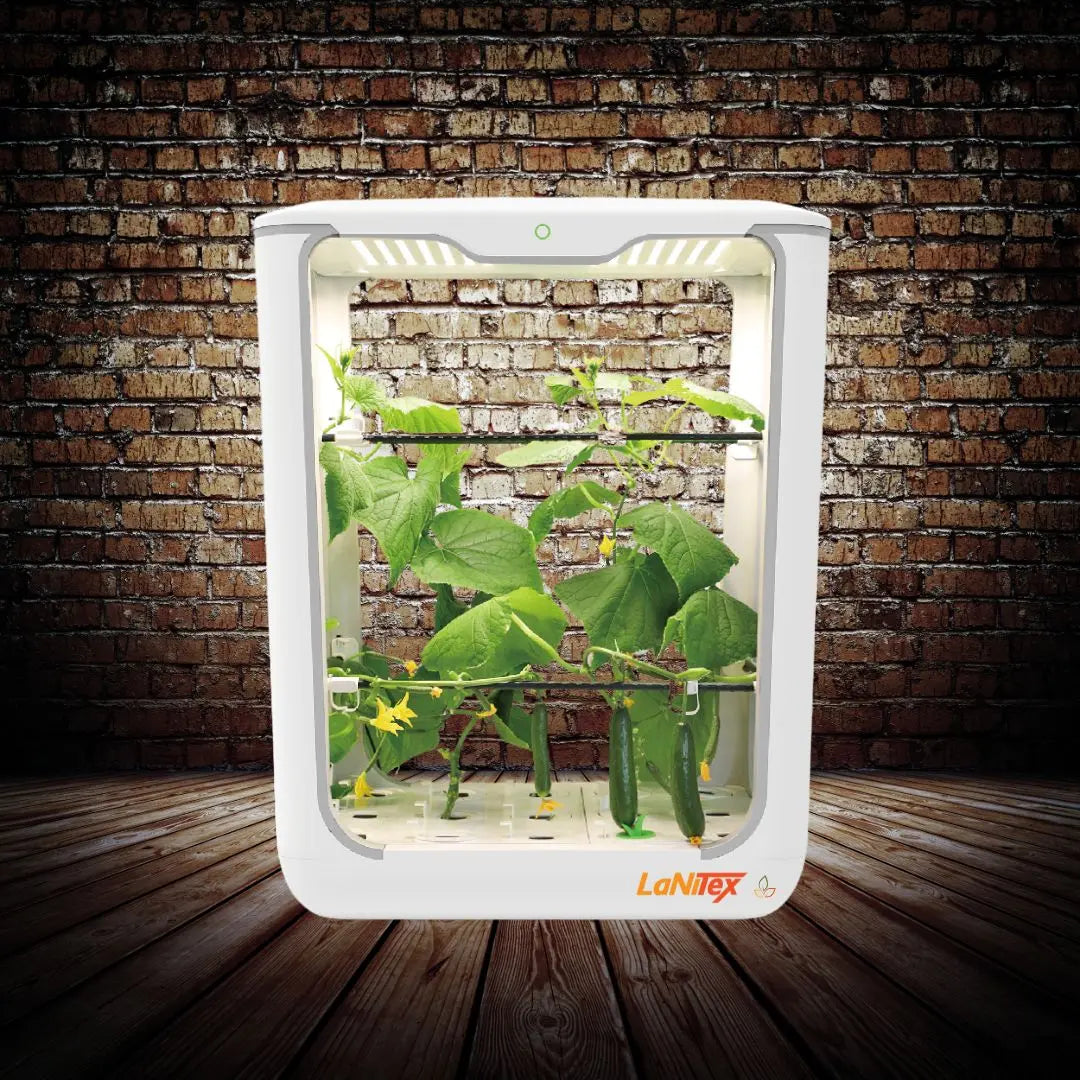
Give tall fruiting crops the height they need to climb and let the hardware handle the busywork. The Grow Box Tall runs a self-watering tank and full-spectrum LED for daily light and water, so you just manage the nutrients.
Set up your grow space →Ships from the Sunshine Coast, Queensland.
What I've learned about growing eggplant from research
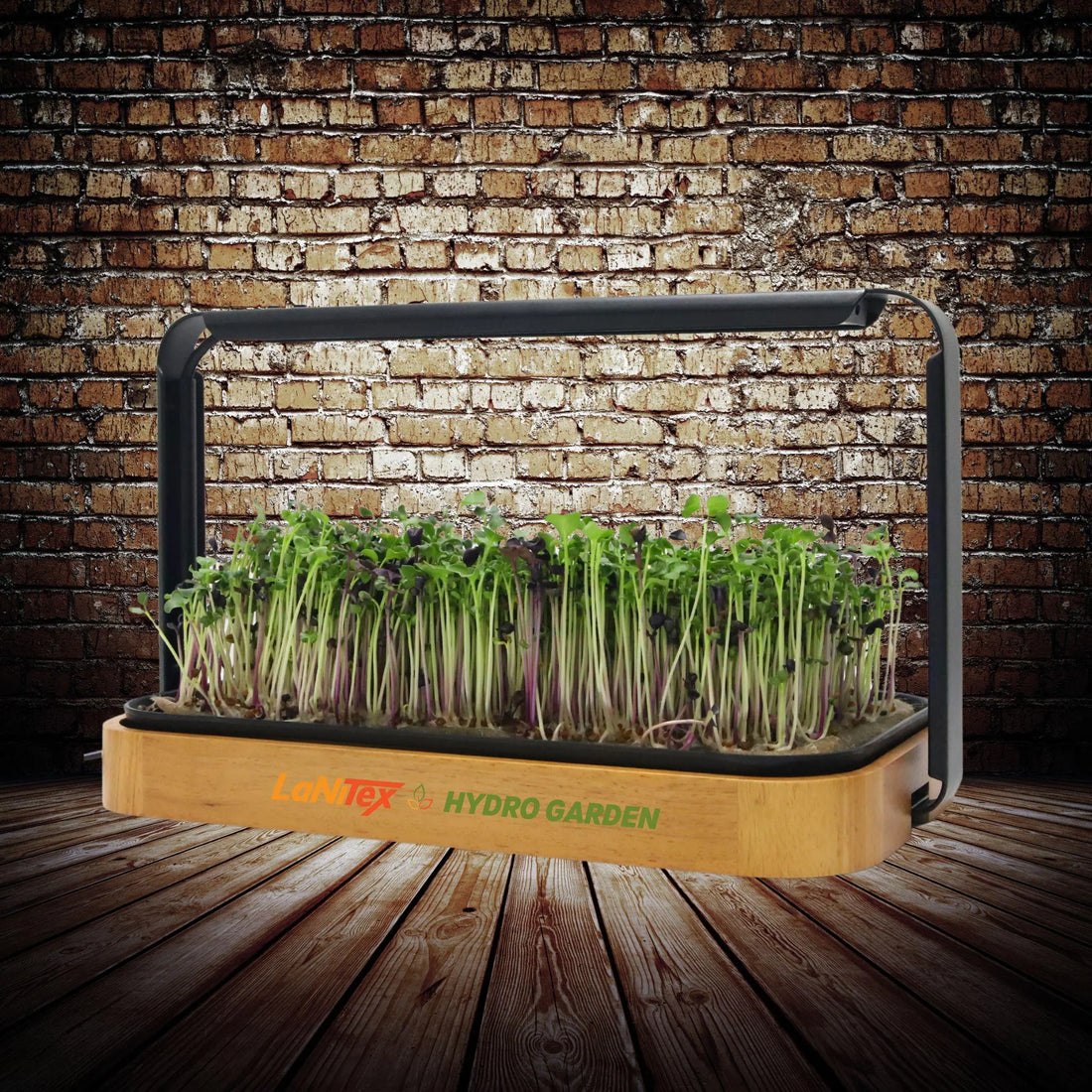
I will be straight with you: I have not yet grown eggplant hydroponically myself. My own testing on the Sunshine Coast has run to microgreens in under a week, lettuce in 25-35 days, and capsicum and herbs that keep producing year-round. Eggplant is next on my list, not behind me.
So what follows is drawn from research rather than my own harvest. Reading across Wikipedia, the RHS and Sustainable Gardening Australia, plus the grower community, a few themes recur. Eggplant is close kin to capsicum, which I have grown: both love warmth, both sulk in the cold, both need feeding well once they fruit. That gives me honest confidence about the setup before the first fruit.
The consistent message from experienced growers is that patience pays. Eggplant is slower to reward you than a leafy crop, flowers can drop if conditions swing, and the plants genuinely need support. Nobody calls it set-and-forget. My advice for a first grow: treat it as a learning run and keep notes on what your own tent does.
Choosing eggplant varieties for hydroponics
Variety choice shapes how well a plant fits your space. 'Black Beauty' is the classic large, glossy, deep-purple type and the one most Australian seed suppliers stock - a solid black beauty eggplant hydroponic australia choice if you have the height for it. 'Rosa Bianca' is a mild Italian heirloom with streaked lavender-white fruit. 'Fairy Tale' is the standout for compact indoor setups: small, early and prolific, so fairy tale eggplant hydroponic growing pays off where headroom is tight. 'Japanese Long' and 'Long Purple' give slender fruit on manageable plants and mature quickly, which suits an indoor tent well.
For a first hydroponic run indoors, lean toward the smaller, faster types - easier to light evenly and easier to stake, and they tell you quickly whether your setup is dialled in. Save the big Black Beauty plants for later.
Get a fresh grow guide like this every fortnight
Join the LaNiTex Hydro Garden newsletter for practical hydroponic, microgreen and mushroom growing tips for Australian homes. Subscribe to download a free hydroponics starter guide (PDF) and get 10% off your first order.
Join the newsletter →Pollination, pruning and trellising indoors
Here is the part beginners miss. Outdoors, bees and wind pollinate eggplant flowers for free; indoors there are none, so you do the job. Eggplant flowers are self-fertile, which makes it easy: a gentle shake, a soft touch to each flower with an electric toothbrush or small brush, and airflow from a fan will move enough pollen to set fruit. Do a round every couple of days while plants flower.

Pruning keeps the plant productive. Take it back to two to four main stems and pinch out the small side shoots so energy goes into fruit, not foliage. Because a fruiting plant gets genuinely top-heavy, trellising is not optional - the RHS advice for aubergines is to stake each plant with a cane and tie in the main stem, and that holds in a grow tent too.
Nutrients, deficiencies and troubleshooting
Good nutrition shows up in the fruit. Getting hydroponic eggplant nutrients australia right means watching a few elements. Calcium deficiency causes blossom-end rot - a sunken brown patch at the base of the fruit - and usually traces back to uneven watering or EC swings, not a lack of calcium. Potassium drives fruit size and quality, so a shortfall leaves small, poor-tasting eggplant. Molybdenum deficiency is rarer, showing as pale, distorted new leaves; it is likelier if your solution drifts too acidic, which loops back to holding that pH range.
Feed matters as much as the numbers. While the plant is building leaf and stem, run a balanced vegetable nutrient; once it starts flowering, switch to a higher-potassium bloom feed, since potassium is what drives fruit size and quality. Change the full nutrient solution every week or two to stop salts building up, and top up between changes with pH-balanced water so the EC does not drift - the same swings that cause blossom-end rot.
Flower drop is the complaint I read most about. The usual causes are temperatures too high or too low, humidity extremes, or poor pollination - all fixable with better environment control. Fix the environment first.
Food safety and pest control matter more in an enclosed setup, not less. Watch for aphids, spider mites and whiteflies - a warm tent is a comfortable home for them. Keep tools and surfaces clean, isolate new plants, and lean on integrated pest management (IPM) - sticky traps, a close eye, and where needed a soap spray or biological control - before anything harsh on a crop you plan to eat.
Growing eggplant through the Australian seasons
Eggplant is a warm-season crop first, and Australia's spread of climates changes the timing. In tropical and subtropical Queensland, the warm months give the longest natural window, and an indoor system extends it into the cooler months too. In the shoulder seasons of the southern states - a Melbourne spring or a Sydney autumn - outdoor plants run out of heat before the fruit ripens, which is exactly where an indoor hydroponic setup earns its keep.
Under lights and steady warmth, expect to harvest roughly 70-90 days after transplanting. Pick fruit while it is firm and glossy; once it turns dull and spongy, it is past its best and tastes bitter. Keep picking, too - it tells the plant to set more. If you also grow summer squash indoors, you will recognise the pattern: steady warmth in, steady fruit out.


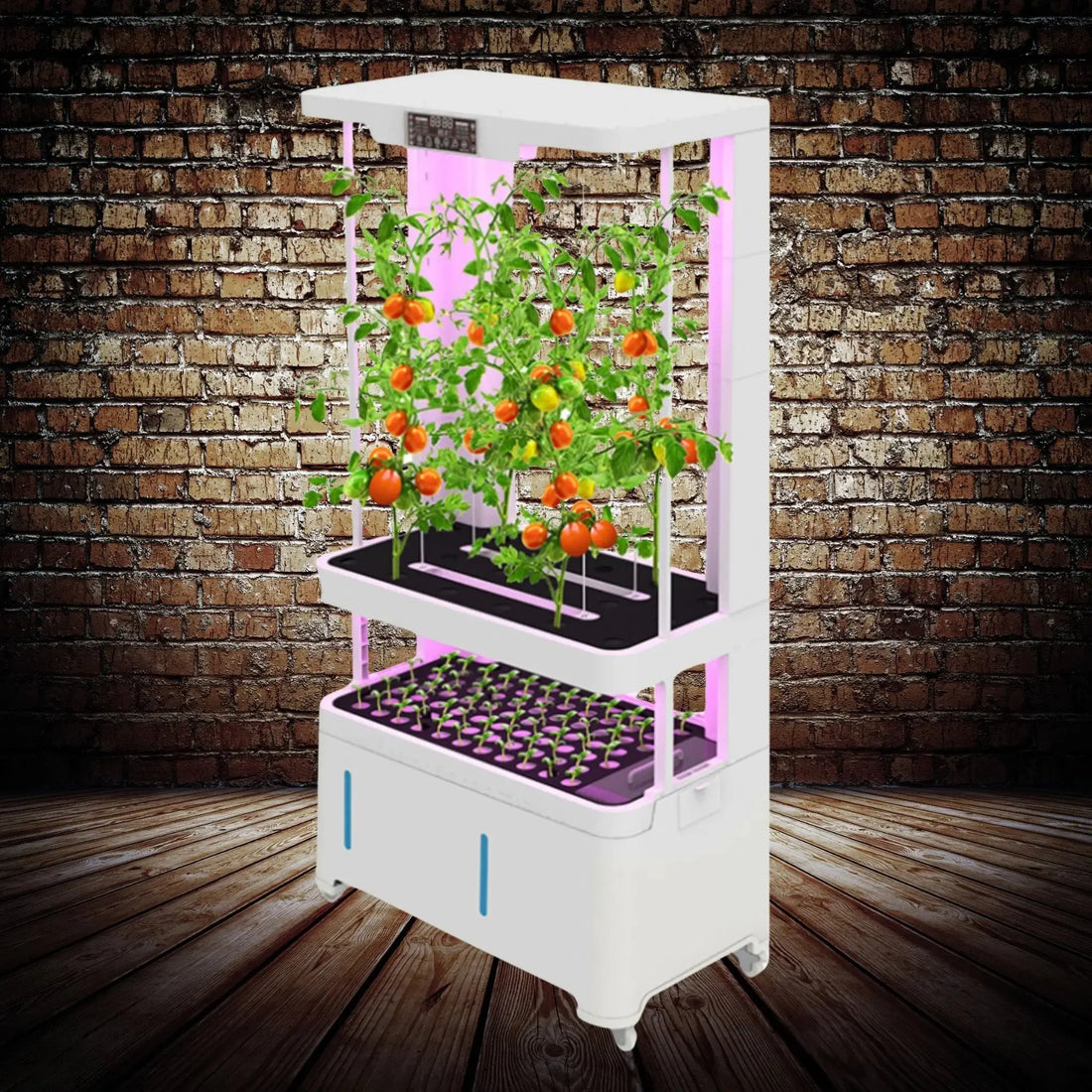
Prefer leafy greens and herbs alongside your fruiting crops? The V5.2-A tower packs vertical growing sites into a small footprint, with the pump and lighting built in. You choose what goes in.
Start your vegetable tower →Ships from the Sunshine Coast, Queensland.
The full range
Find the system that fits your space


Supported in Australia - every model tested before listing.
Frequently asked questions
How do I grow eggplant in a hydroponic system at home in Australia?
Start with a Dutch bucket or drip system, since eggplant grows tall and heavy. Fill buckets with coco coir and perlite, set pH to 5.5-6.5 and EC to 2.5-3.5 mS/cm, and run lights at 500-700 umol/m2/s for 12-16 hours. Keep the air at 21-29C, hand pollinate the flowers, and stake each plant.
When should I plant eggplant in Australia?
Outdoors, plant after the last frost once the soil warms - spring across most of the country, with a longer window in subtropical Queensland. Indoors in a hydroponic system you are not tied to the season: with steady warmth and lights, you can start eggplant at any time of year and crop it through the cooler months.
What is the best EC and pH range for hydroponic eggplant?
Aim for pH 5.5-6.5 and EC 2.5-3.5 mS/cm for established, fruiting plants. Start seedlings gentler, around 0.5-1.5 EC, and raise the strength each week as they grow. Check both daily - eggplant is a heavy feeder, and swings in either number often cause blossom-end rot and flower drop.
Which eggplant varieties grow best in hydroponics in Australia?
'Black Beauty' is the widely available large-fruited classic. For compact indoor systems, 'Fairy Tale', 'Japanese Long' and 'Long Purple' are better - smaller, faster and easier to light and support. 'Rosa Bianca' is a mild heirloom worth trying once your setup is running. Start with a small, early type.
How much light do hydroponic eggplants need indoors?
Roughly 500-700 umol/m2/s of PPFD for 12-16 hours a day. That is more than leafy greens need, so a decent full-spectrum LED matters. Too little light gives leggy plants and few fruit. Keep the canopy an even distance from the lamp so every plant gets a fair share.
When is eggplant ready to harvest, and how long does it take?
Under steady warmth and good light, expect to pick fruit roughly 70-90 days after transplanting seedlings - hydroponics can edge this along, because the plant never stalls waiting for heat. You know a fruit is ready when the skin is firm and glossy and springs back to a gentle press; pick it before the seeds inside brown, because dull, spongy, seedy fruit has gone past its best and tastes bitter.
What hydroponic system is best for growing eggplant (Dutch buckets vs NFT)?
Dutch buckets win for eggplant. The plant grows tall and top-heavy, and a bucket of media gives the roots room plus a stable base for staking. A japanese eggplant dutch bucket system is a forgiving starting point. NFT is built for light leafy crops and only suits eggplant with strong added trellising.
Why are my hydroponic eggplant flowers dropping off?
Flower drop usually comes down to environment: temperatures too high or too low, humidity extremes, or poor pollination. Keep the air at 21-29C, humidity around 40-70%, and hand pollinate every couple of days with a gentle shake or a small brush. Steady EC and pH help too, since stressed plants shed flowers first.
Can I grow eggplant alongside other plants indoors?
Yes. Eggplant shares its warmth, light and feeding needs with capsicum, tomato and basil, so they make good indoor companions. Give a top-heavy eggplant enough space that it is not crowded or shaded, and stake each plant. If you want leafy greens and herbs growing next to your fruiting crops, a vertical system like the V5.2-A tower fits several into a small footprint.
Is eggplant a fruit or a vegetable?
Botanically, eggplant is a fruit - a berry - because it develops from the plant's flower and carries the seeds. In the kitchen it is treated as a vegetable, which is why most people call it one. Either way it grows like the fruiting crop it is, needing warmth, light and support to set and ripen.
About the writer
Laszlo Bulatko founded LaNiTex Hydro Garden in December 2024, and runs it from the Sunshine Coast in Queensland. Before hydroponics, he spent 15 years in sales, marketing and brand development in the Hungarian fishing-tackle industry, after starting his career at IBM and Diageo. His own at-home testing on the Sunshine Coast has produced microgreens in under a week, lettuce in 25-35 days, and capsicum and herbs year-round. He also runs the Term-Grow Enrolment program, placing grow boxes in Queensland primary-school classrooms. Read more on the about Laszlo page.
Sources
- Wikipedia, "Eggplant" - en.wikipedia.org/wiki/Eggplant. Supports Solanum melongena, the Solanaceae (nightshade) family, its preference for hot weather, a mature size of 40-150 cm, and self- or cross-pollinating flowers.
- Royal Horticultural Society, "Grow your own aubergines" - rhs.org.uk/vegetables/aubergines/grow-your-own. Supports that seeds need at least 21C to germinate and that top-heavy plants should be staked and tied in.
- Sustainable Gardening Australia, "The pros and cons of hydroponic growing" - sgaonline.org.au/the-pros-and-cons-of-hydroponic-growing. Supports that hydroponics can use up to 90% less water and 75% less fertiliser than soil.